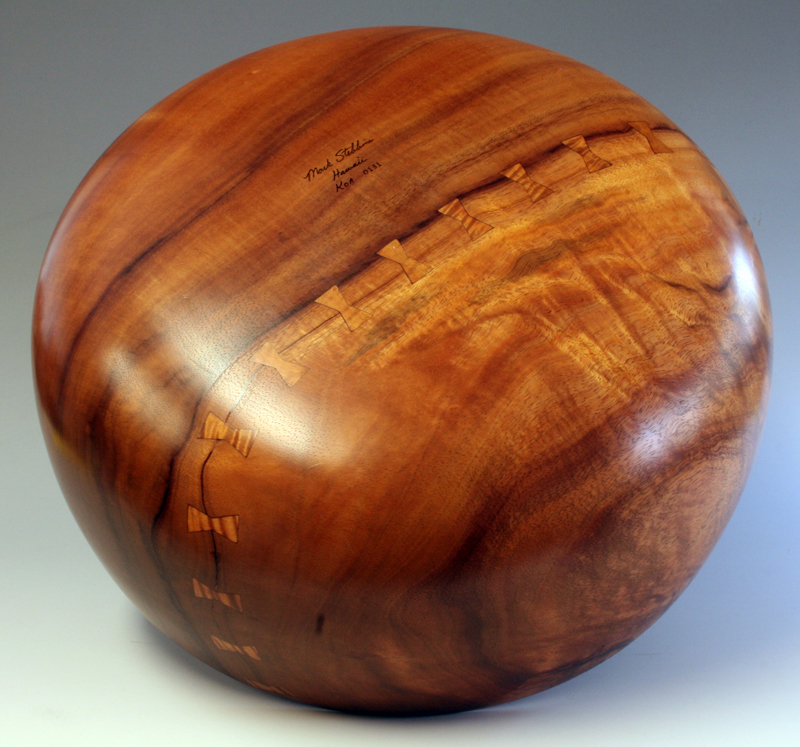
Note: Most of the questions below are oriented toward installing butterfly patches to strengthen cracks and to repair imperfections in turned bowls. However most of these questions apply toward flat surfaces as well.
Q. What type of router works best with the system?
A. A laminate trimmer works best. It is smaller and easier to handle than most full size routers. We have had success with the Porter Cable® PCE 6430, however any laminate trimmer or router with a manufacturer supplied adaptor for Porter Cable® bushings will work. The size of the base thru hole must be 1-3/16” with a 1-3/8” rim.
Q. Can you describe the bushing set and router bit?
A. We use the Router Inlay kit with a solid carbide downcut spiral bit from MLCS woodworking (#9177) at www.mlcswoodworking.com. The kit includes the bushing, sleeve, retainer nut, and bit. Similar sets are available from other vendors. Note that the outer bushing sleeve is removed and not used in our process.
Q. Can I use a Dremel-type rotary tool to do the routing?
A. Dremel tools are not recommended. Theoretically it might be possible to set one up with a base plate and the bushing set, but all attempts that we are aware of have not worked out.
Q. Why use a downcut bit?
A. The downward shearing action of a downcut spiral bit helps to avoid tearing of the wood grain at the edges of the recess.
Q. Can you offer tips and suggestions on the routing procedure?
A. First remember that the carbide bit is fragile. If dropped, it will likely break and therefore it is always a good idea to have a spare bit on hand. Make a series of light cuts, about 1/16” or 3/32” per pass, clearing the chips along the way until the desired depth is achieved, the edges are true and the recessed surface is flat. We recommend a final depth of about 3/16” or slightly less. Note that the patch thickness is just over 3/16”, about 0.2”.
Q. On a bowl, do the patches go all of the way through the wood?
A. Not in most applications. The full strength of the patch is realized by adherence not only to the patch edges, but to the flat bottom of the recess generated with the guide template and router.
Q. At what point should the patches be installed?
A. The best time to install the patches is during the final sanding stages of the outer surface of the bowl. Starting with your dried rough bowl blank, turn to the final form and sand down to 150-240 grit. Install the patches, let the glue dry, and hand sand them to the rough contour of the bowl prior to final power sanding on the lathe.
Q. Can’t I just power sand on the lathe immediately after patch installation?
A. It is possible but if the sander bounces off the proud portion of the patch it can land on another area of the bowl as it turns on the lathe and create a slight depression. This “sander-bounce” effect is avoided by removing most of the proud portion of the patch with a sanding block prior to power sanding on the lathe.
Q. Are there patches that don’t require removing the corner points for the recess?
A. Yes, we also supply “rounded-corner” butterfly patches. Select this option during the checkout process.
Q. What is the easiest way to remove the corner points from the recess?
A. Use a sharp utility knife. With the blade facing upward, insert the tip into the corner, then align the blade with the desired cut direction and raise the handle to cut the wood fibers. With practice, this takes very little time.
Q. What type of glue should I use?
A. We recommend using a quality aliphatic wood glue such as one of the Titebond products. CA glue can be used , but although it can be dried instantly with accelerator, it tends to be more brittle and may not hold up as well in the long run.
Q. How can I avoid glue marks or glue stain?
A. After routing the recess, apply a very light coat of sanding sealer to the surface of the bowl around the recess. Then apply the glue and install the patch. The sealer will help to prevent the glue from penetrating the bowl fibers and staining the wood.
Q. Can I send you some wood and have patches custom cut from it?
A. Yes. Please call to make arrangements (808) 982-9987.
Q. Can you supply all of the equipment and materials needed to get started?
A. Yes. Please call to make arrangements (808) 982-9987.
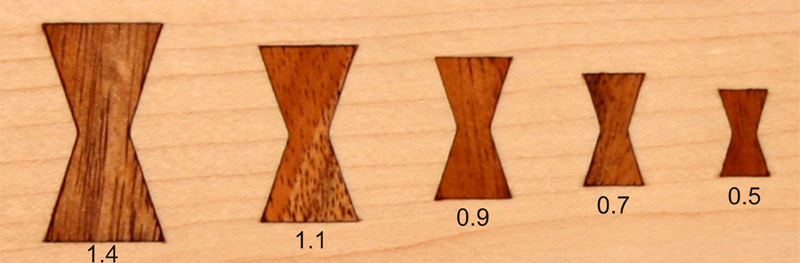
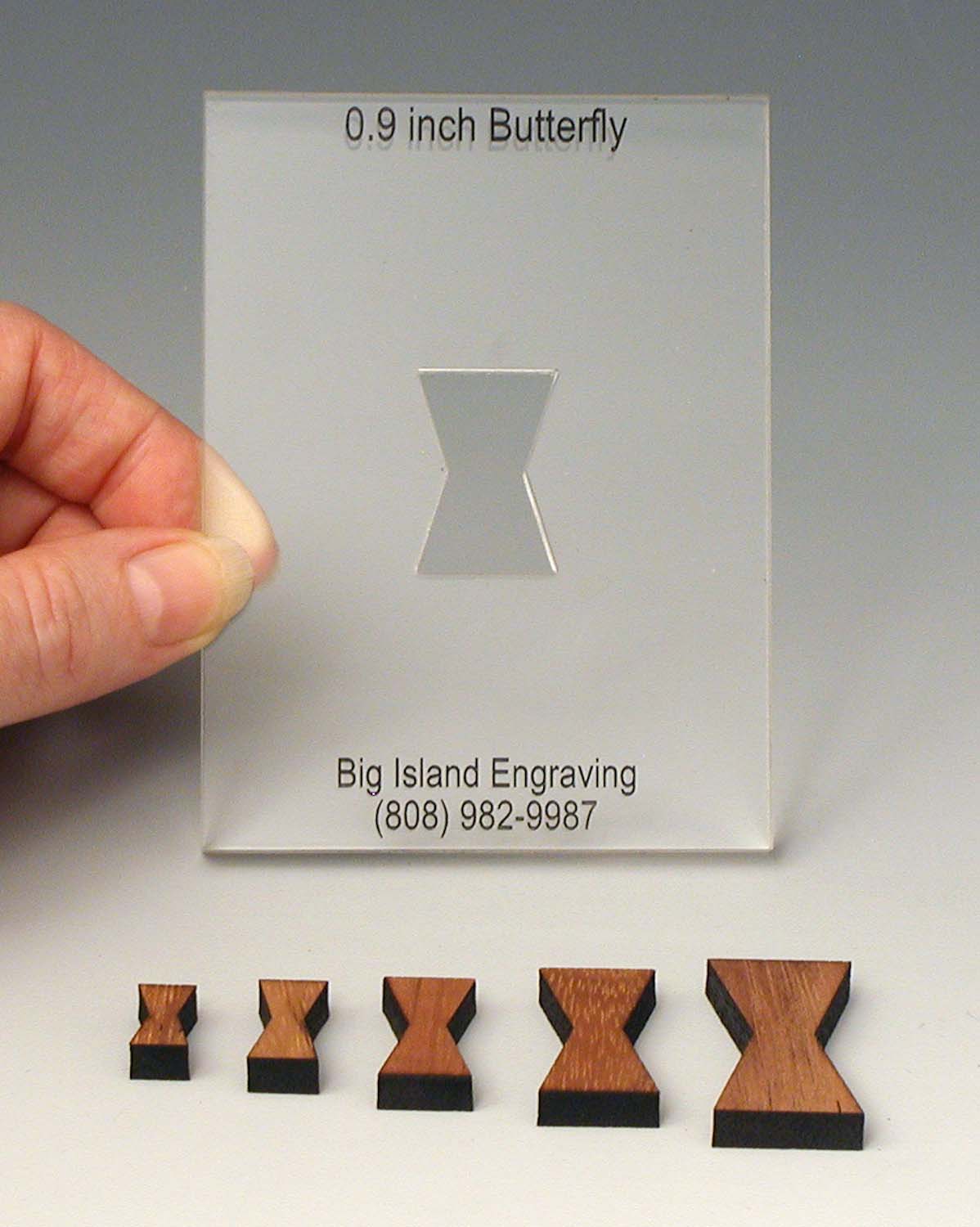

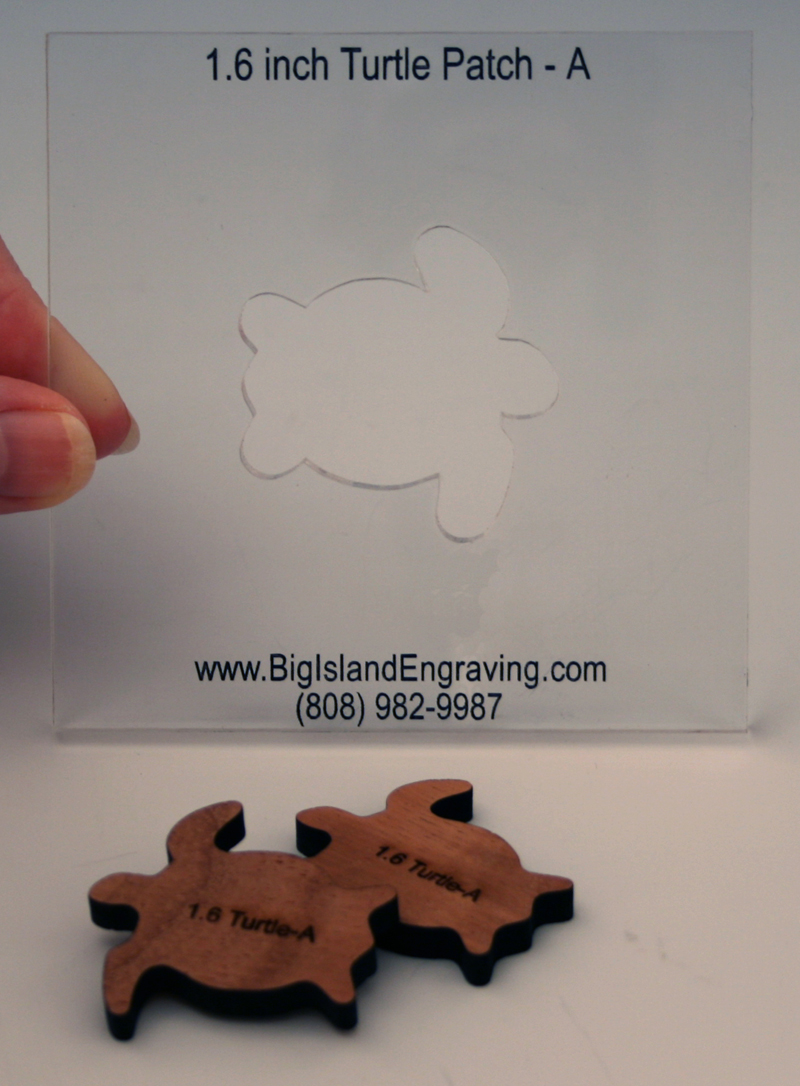
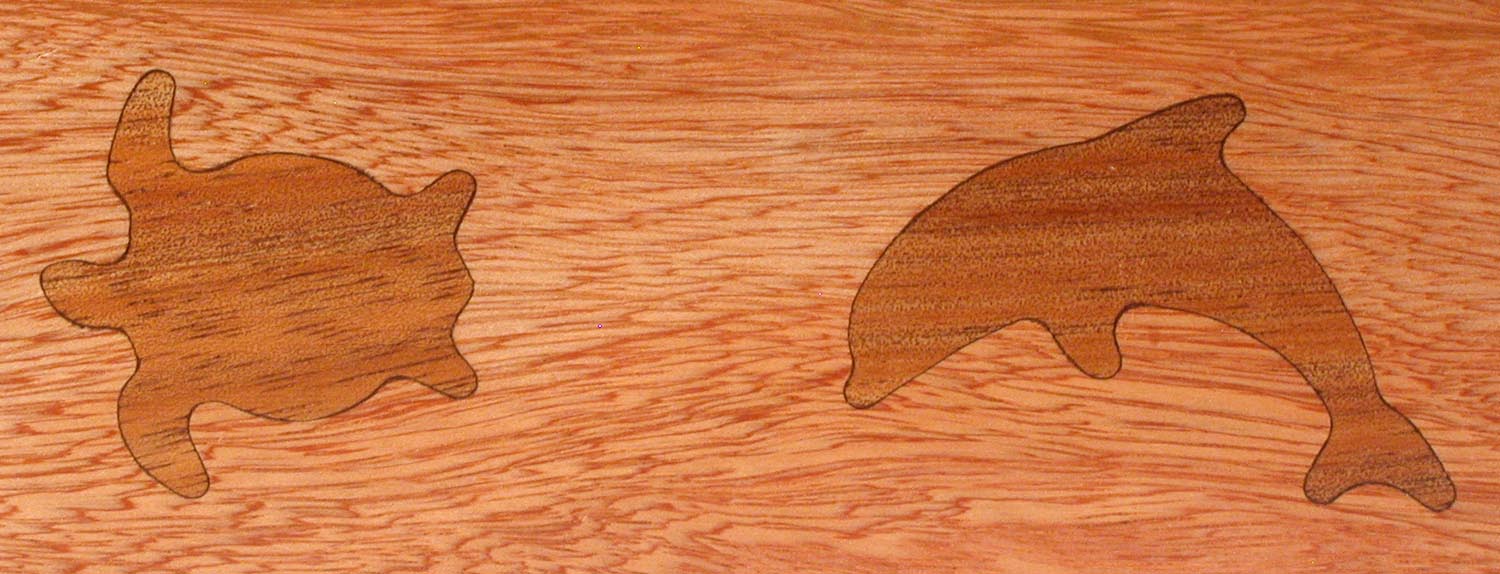
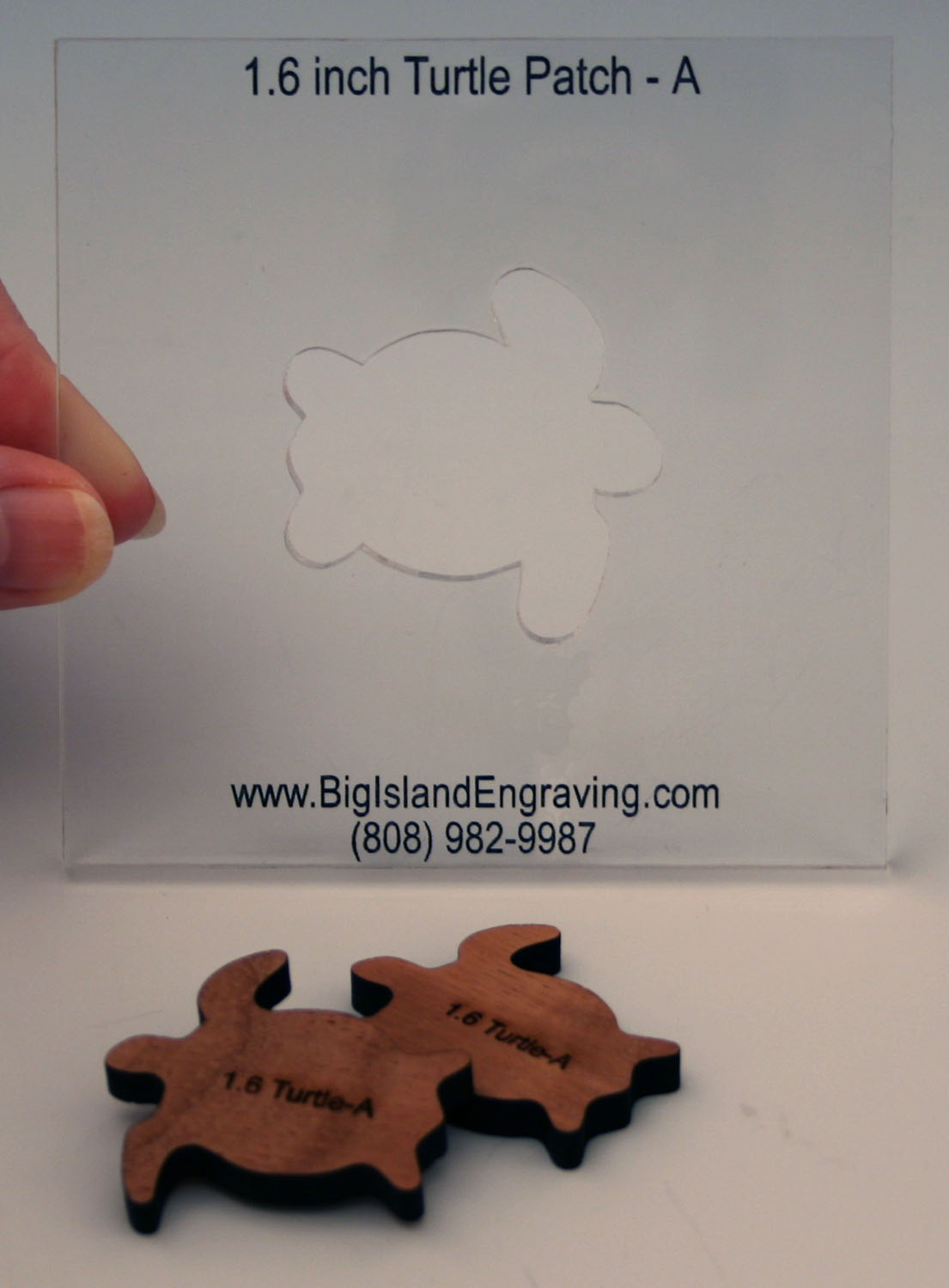
 If rounded corners are your preference, simply choose the option when ordering. Questions? Please